


Crypto Market Quarterly Outlook: Q2 2026 to Q1 2027




Jeremy Baumann
Chief Investment Officer
The Big Picture
The world is swimming in debt. Governments and corporations have borrowed more than ever before, and a massive wave of that debt needs to be refinanced over the next few years. At the same time, the amount of money available in the financial system to handle all that refinancing is starting to slow down. When the debt keeps growing but the money to service it does not, things break. That tension is the backdrop for everything happening in markets right now.
On top of this, the closure of the Strait of Hormuz has removed a significant share of the world's energy supply from the market. Oil prices have spiked, and the pain is spreading beyond fuel into plastics, fertiliser, freight, and food. This is pushing inflation higher just as central banks were hoping to cut interest rates. The result is an uncomfortable standoff: the economy needs cheaper money, but rising prices make that harder to deliver.
What This Means for Crypto
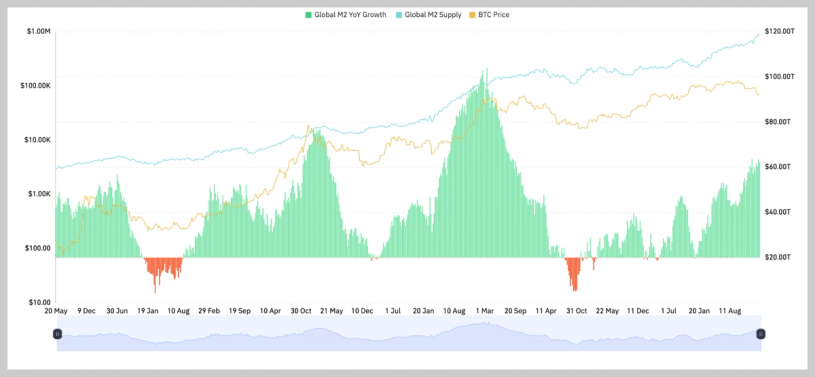
Crypto prices are driven primarily by liquidity, the amount of money flowing through the global financial system. Right now, the signals are mixed. Some measures of liquidity are at record highs, suggesting the worst may be behind us. Others show the plumbing is stressed and fragile. That disagreement is itself the story: we are in a transition period where the direction has not yet been decided.
Bitcoin has already priced in a recession that has not happened. It is trading well below where global liquidity levels suggest it should be. That gap tends to close, sometimes very quickly. The risk-reward for patient investors with a 6 to 12 month horizon is compelling.

Why We Own What We Own
Bitcoin: The Monetary Debasement Hedge
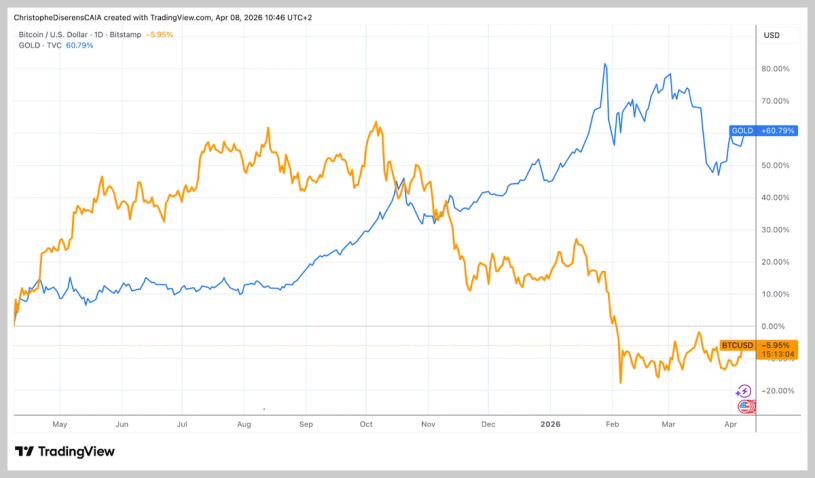
The world's total debt is on track to reach $65 trillion in refinancing needs by 2030. There is only one way out of debt this large: you inflate it away. Governments will print money, devalue currencies, and let inflation erode the real value of what they owe. They have no other viable option. In that world, you want to own assets that cannot be printed: gold, Bitcoin, and prime real estate.
Gold has already responded, hitting record highs. Bitcoin is the same trade for a digital generation, with one critical advantage: it is programmable, portable, and accessible to anyone with an internet connection. As monetary debasement accelerates, the case for holding hard assets only gets stronger. Bitcoin is not a speculation. It is insurance against the inevitable dilution of paper money.

Ethereum and Solana: The New Financial Rails
The traditional financial system moves trillions of dollars every day, but it runs on infrastructure built decades ago. Settlement takes days. Reconciliation is manual. The cost of moving money across borders is absurdly high. Ethereum and Solana are building the replacement.
Stablecoins, digital dollars that live on these blockchains, are already the fastest-growing segment of the crypto economy. Over $300 billion in stablecoin value sits on-chain today, and it is growing at five times the rate of everything else in decentralised finance. Major financial institutions are not debating whether to bring assets on-chain anymore. They are debating which chain to build on.
The next wave goes even further. AI agents, software that can autonomously execute transactions, purchase data, and settle contracts, need programmable money on programmable rails. The traditional banking system was not designed for machines to use. Ethereum and Solana were. When agents are the users, the addressable market is no longer limited to the number of humans with bank accounts. It becomes effectively unlimited.
Owning ETH and SOL today is not a bet on token prices. It is ownership of the infrastructure that the next generation of finance will run on.
Where We Stand
The near-term environment is difficult. Energy prices are elevated, interest rates are uncertain, and volatility is high. We are not pretending otherwise. But the conditions for the next major move higher are assembling underneath the surface: record levels of aggregate liquidity, extreme bearish sentiment (historically a contrarian buy signal), and crypto assets trading at deep discounts to their own fundamentals.
We are accumulating with discipline. The speculative froth has been washed out. What remains is infrastructure that is stronger than it has ever been. On a longer horizon, the global monetary system is splitting into two blocs: a gold-backed Eastern system and a stablecoin-powered Western system. Crypto is foundational to the Western side of that equation. Owning core crypto assets today is not just a trade. It is positioning for the monetary architecture of the next decade.
Dive deeper with the advanced version
Date modified: