Bitcoin Halving
The next Bitcoin halving is expected around April 2028, at block 1,050,000. The reward paid to miners for each block will then drop from 3.125 to 1.5625 BTC. The halving cuts the issuance of new bitcoins in half roughly every four years, up to the 21 million cap.
Bitcoin halving countdown
The Bitcoin halving countdown displayed is merely indicative, as the precise date of the next halving depends on the rate of block creation, which varies per day.
What is a Bitcoin halving?


Bitcoin halving explained
Bitcoin halving happens around every four years and reduces by half the reward for mining new Bitcoins. Each halving decreases the number of new Bitcoins awarded to miners for each block mined. The periodic halvings control new Bitcoin supply, fight inflation, and keep Bitcoin scarce. Satoshi Nakamoto integrated it into Bitcoin's design, limiting total coins to 21 million.

What does it mean for you?
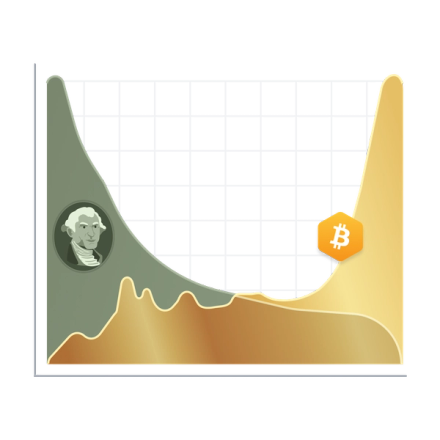
Bitcoin Halving plays a central role in controlling the amount of new Bitcoin introduced into the market, making the cryptocurrency more akin to a store of value like gold rather than a fiat currency. It slows the issuance of new bitcoins and reduces miner revenue; its effect on price depends on demand and is never guaranteed.


Why the months prior are important
Bitcoin halving reduces the supply of new bitcoins entering the market, which can influence the price if demand holds. It also reduces miner earnings, which could weigh on network security if some miners stop mining.

Bitcoin halving dates
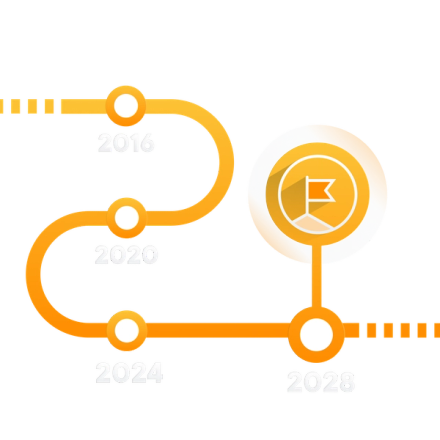
To date, 4 Bitcoin halvings have occurred: in 2012, the block reward reduced from 50 BTC to 25 BTC; in 2016, it decreased to 12.5 BTC; in May 2020, it settled at 6.25 BTC; and in April 2024, it settled at 3.125 BTC. The fifth halving, expected around April 2028 at block 1,050,000, will lower the reward to 1.5625 BTC. As of 19 October 2026 (block 972,134, source: mempool.space), about 20.1 million BTC had been issued out of a maximum of 21 million.


Our experts thoughts on the Bitcoin halving
Strategies to prepare for the Bitcoin halving


Step 1 - Buy Bitcoin with the Smart Engine
The Smart Engine compares prices across several exchanges and splits your buy order between them.


Step 2 - Diversify with Best Blockchains
Diversify across several major blockchains in a single investment.
Exclusive tools
Explore exclusive tools only accessible to our SwissBorg community

Auto-Invest
Automate your Bitcoin accumulation today!

Price Alerts
Receive notifications when Bitcoin reaches certain prices.
Frequently asked questions
As part of Bitcoin's deflationary monetary policy, halving occurs to limit the issuance of new bitcoins over time by maintaining a stable flow of new coins in the market. This event slows down the generation of new Bitcoins, thereby reducing the rate of Bitcoin's monetary inflation. By cutting down on the reward given to miners, the event prevents the maximum supply of 21 million Bitcoin from being surpassed.
Halving plays a significant role in Bitcoin's economy as it influences miners' profitability in mining new blocks and the total number of Bitcoins that will eventually be minted. Affecting Bitcoin's supply, it leads to heightened Bitcoin scarcity and hones its deflationary aspect. In the past, price increases followed some halvings, but past performance is not a reliable indicator of future results.
Bitcoin's halving is coded into its protocol. It has been designed to occur such that every 210,000 blocks mined results in a halving event, thinning the miners' reward. The blocks, adding up approximately every 10 minutes, ensure the halving takes place at regular, predictable intervals, particularly every four years or every 210,000 blocks mined.
The next Bitcoin halving, the fifth, is expected around April 2028, at block 1,050,000, about four years after the April 2024 halving. The exact date depends on the block production rate, which varies daily.
Bitcoin's total supply is capped at 21 million. As of 19 October 2026 (block 972,134, source: mempool.space), about 20.1 million had been issued, leaving close to 0.9 million bitcoins to be mined. Each halving slows that pace, and the last bitcoins are expected to be issued around 2140.
The last Bitcoin halving, the fourth, took place on 20 April 2024 at block 840,000. The miner reward dropped from 6.25 to 3.125 BTC per block.
Should a large number of miners exit the network, there could be a temporary delay in the processing of transactions until the next difficulty adjustment. It might potentially enhance the profitability for the remaining miners due to the decreased competition but could also affect the network's security.
Predicting the exact price changes after a Bitcoin halving is speculative, yet historically there have been an increase in Bitcoin's price post-halving due to the reduction in supply and increased demand. However, market forces are multifaceted and variable; the price fluctuates according to other influences as well. Past performance is not a reliable indicator of future results.
Nakamoto designed the issuance schedule to mirror the rate of gold mining, becoming increasingly difficult over time while yielding less. This fixed issuance schedule facilitates a predictable monetary policy, designed to avoid hyperinflation and maintain scarcity.
Economic theory suggests a decrease in supply should result in price increases if demand remains steady or grows. This principle applies to Bitcoin post-halving, where the reduction in supply can induce an increase in Bitcoin's price
The halving event can promote price volatility due to the different reactions from market speculators and traders to the event. The increased trading action around the event can lead to possible fluctuations in the short-term even though Bitcoin's price is also influenced by a multitude of other factors.
Bitcoin's issuance schedule has remained as described in the original Bitcoin White Paper by Satoshi Nakamoto, featuring a halving event approximately every four years or every 210,000 blocks mined.
Bitcoin halving can have a mixed impact on miners. On one hand, it reduces their immediate earnings by halving the block rewards, which can be challenging, especially for those with higher operational costs. On the other hand, Bitcoin's price has risen after some past halvings, although past performance is not a reliable indicator of future results. If the price of Bitcoin rises sufficiently, it can offset the reduced block reward. However, the increased competition and potential network security concerns due to a decrease in mining activity are also factors to consider. Ultimately, each halving's impact varies, and miners often adapt by improving efficiency or diversifying their operations.
Yes, we do. SwissBorg has prepared a starter kit for the Bitcoin halving to help the community navigate this event as well as possible. You can find the Bitcoin halving starter kit.